

Business card design tips
- Louise Kenny

- Sep 21, 2025
- 3 min read
Small card. Big impact. Here’s how to design a business card that looks professional, feels intentional, and actually gets kept, not tossed.

Why business cards still matter
Even in a digital world, business cards remain one of the quickest ways to make a professional first impression. They’re small, simple, and if designed well, they’re a powerful extension of your brand. A well-designed card can spark interest, start conversations, and help people remember you long after that first meeting.
1. Keep your layout clean and intentional
Cluttered cards get thrown away. Aim for a simple, well-spaced design that guides the eye.Include only the essentials:
Your name
Business name
Job title
Phone / email
Website
Optional: social icons or a QR code
Think of your business card as a snapshot of your brand, not your entire resume.
2. Let your branding lead the way
Your business card should instantly feel like you or your brand.
Make sure it reflects your brand colours, typography, and overall tone. Consistency builds recognition — whether someone finds you online or holds your card in their hand.
3. Choose the right typography
Readable fonts are non-negotiable. Use a clear, professional typeface and avoid squeezing text too small just to fit more in. Hierarchies matter too; your name or business name should usually be the hero.
4. Make space your friend
One of the biggest mistakes in business card design is trying to fill every corner. Generous breathing space instantly makes a card feel more premium, modern, and confident.
A tasteful amount of blank space around your logo and typography gives your design room to breathe, and that breathing room is what makes it look expensive.
When everything has space, it becomes easier to read, easier to remember, and far more visually appealing.
5. Paper stock makes a huge difference
Your card should look good and feel good. Premium stock, textured paper, or a matte finish instantly elevates your brand. If you want something memorable, consider options like:
Soft-touch laminate
Spot UV details
Rounded corners
Recycled or eco-friendly stock
Good print quality reinforces that you care about the details.
6. Make use of the back of the card
Don’t leave it blank unless you’re doing so intentionally.
The back is perfect for:
A bold logo
A tagline or brand message
A QR code to your website or portfolio
A pattern or colour block that ties your visuals together
It’s free real estate — use it well.
7. Check your spacing, margins, and bleed
Print files need proper setup to avoid cut-off text or wonky borders.
Make sure to:
Allow safe margins inside
Include bleed around the edges
Keep key elements away from trims
A designer (hi, that’s me!) will always export this correctly for you, but it’s worth knowing why it matters.
7. Proofread everything!!!
You’d be shocked how many business cards go to print with the wrong phone number or a typo in an email address. Triple-check everything before sending to print, it saves money and embarrassment, trust me.
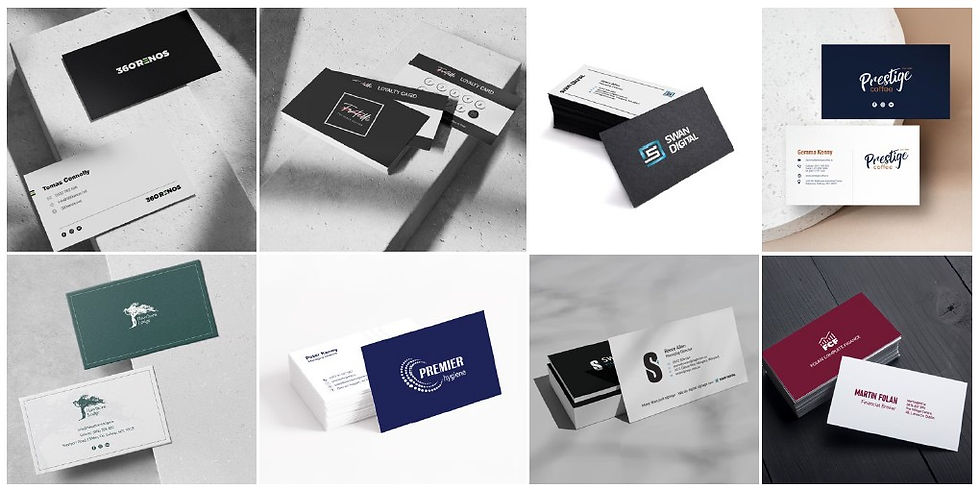
A business card is often the first physical touchpoint people have with your brand. With thoughtful design and quality print, it becomes a memorable, professional extension of your business. If you’re considering a revamp or want a custom design that stands out, I’m always happy to help. Once your design is finalised, I can arrange high-quality printing and have your cards delivered straight to your door.

